Table of Contents
1 Representations
1.1 Geometric
1.1.1 Exercises
1.1.1.1 Problem set
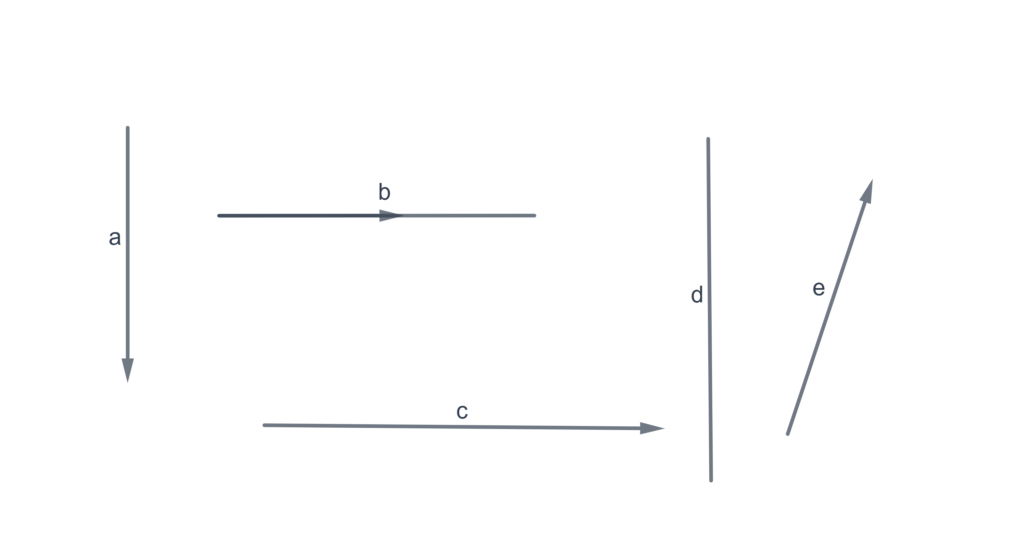
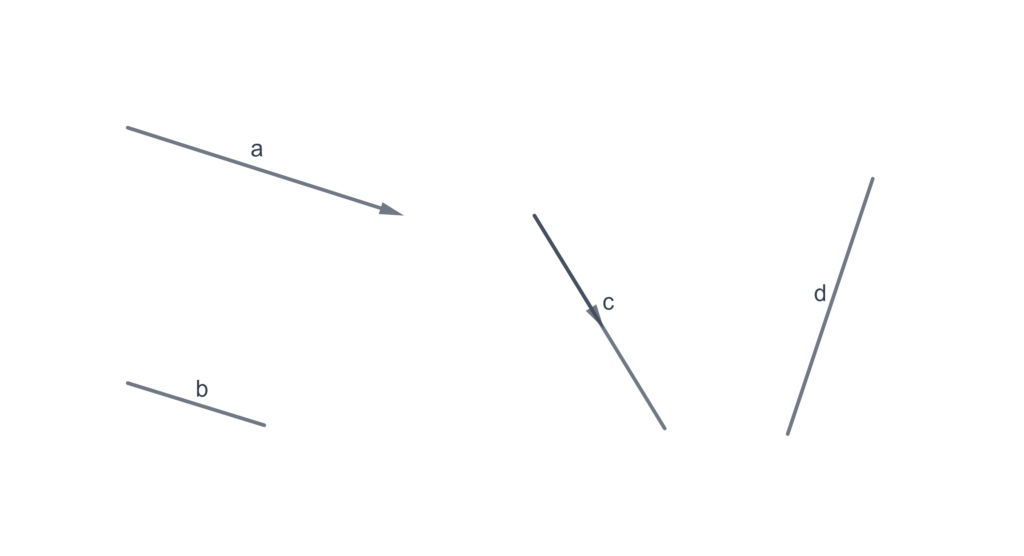
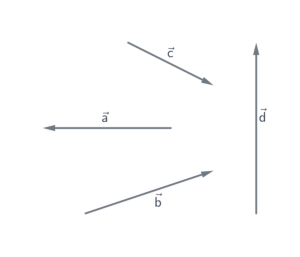
In each of the following problems, give which of the line segments represent vectors.
1.1.1.2 Problem set
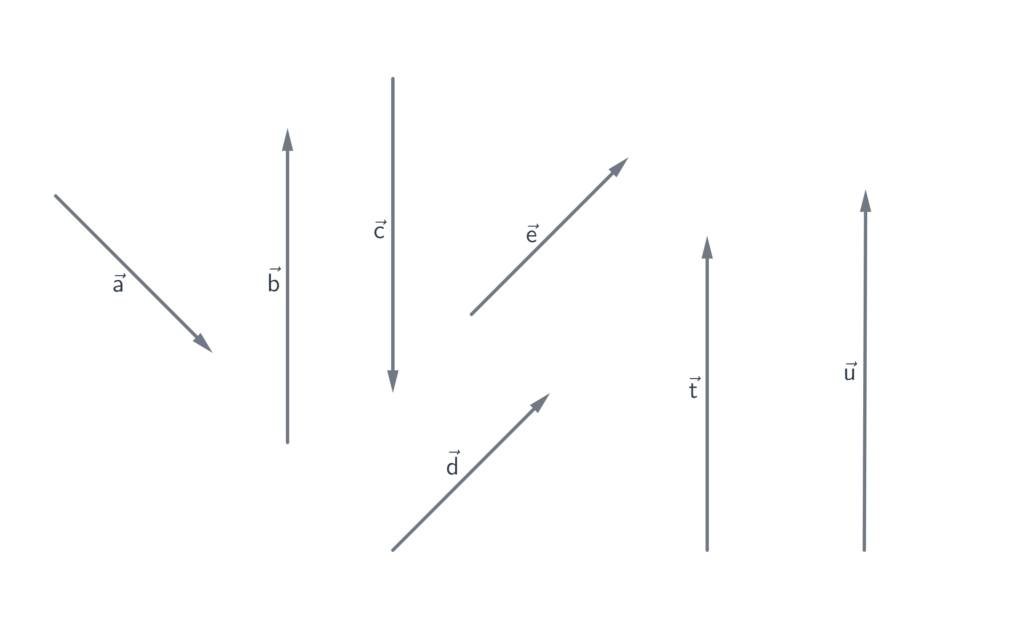
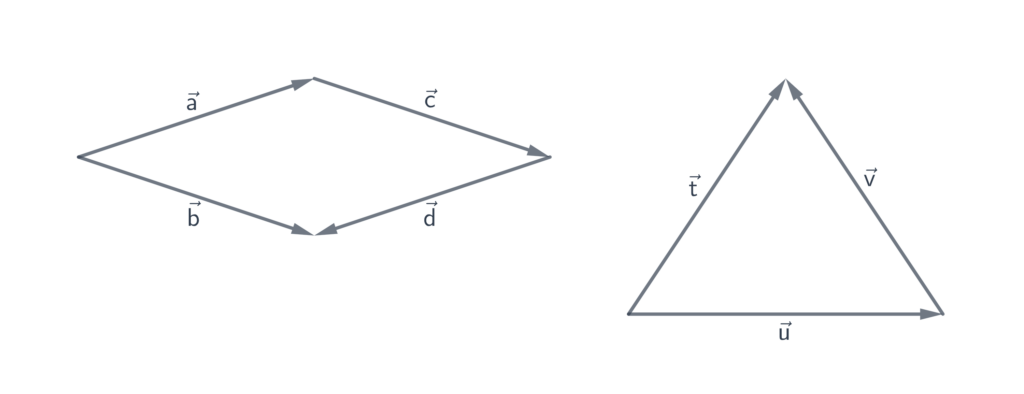
In each of the following problems, identify collections of directed line segments that represent the same vector.
1.1.1.3 Problem set
- Reina applies a force of
newtons at an angle of
East of North. Erica applies a force of
newtons at an angle of
West of North. Represent each vector geometrically using two different directed line segments.
1.2 Algebraic
1.2.1 Exercises
1.2.1.1 Problem set
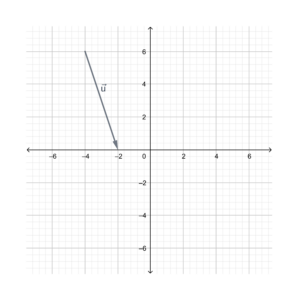
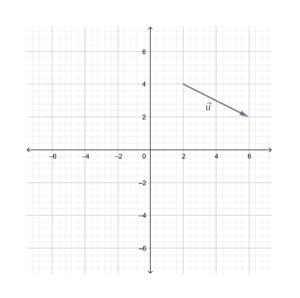
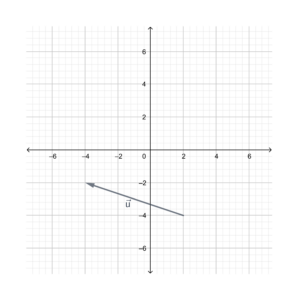
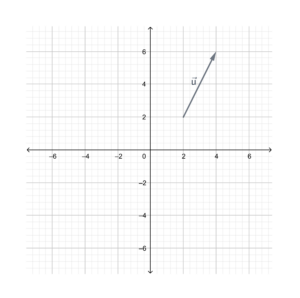
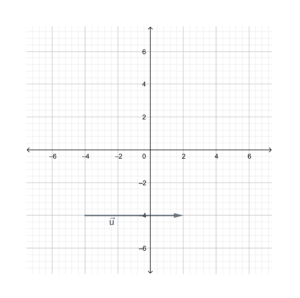
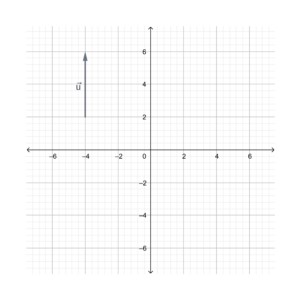
In each of the following problems, draw the standard representation of the vector, and write the vector in component form.
1.2.1.2 Problem set
- Write
in component form.
- Write
in terms of the standard unit vectors.
2 Magnitude and direction
2.1 Exercises
2.1.1 Problem set
Evaluate the following.


2.1.2 Problem set
For each of the following vectors, find a unit vector in the direction of the vector.


3 Operations
3.1 Addition
3.1.1 Exercises
3.1.1.1 Problem set
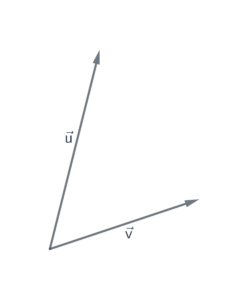
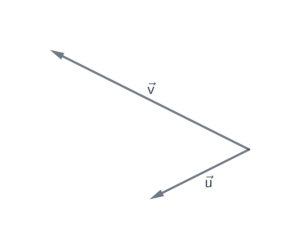
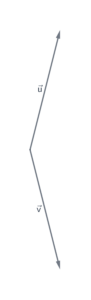
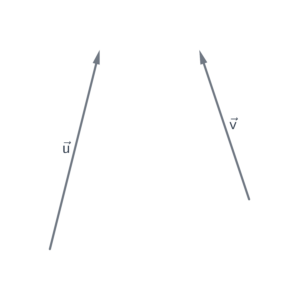
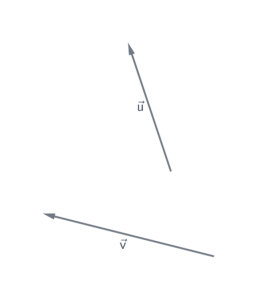
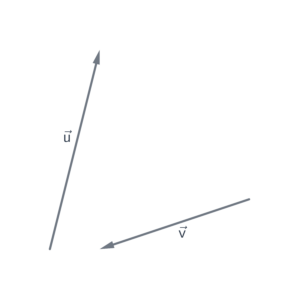
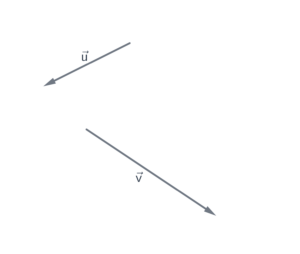
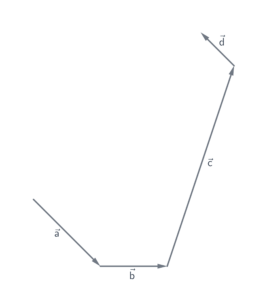
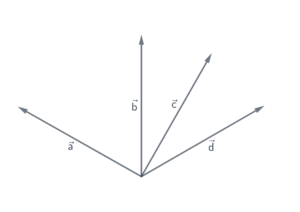
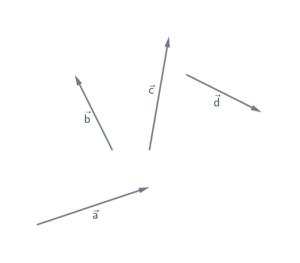
In each of the following problems, add the vectors shown and draw the resultant vector.
3.1.1.2 Problem set
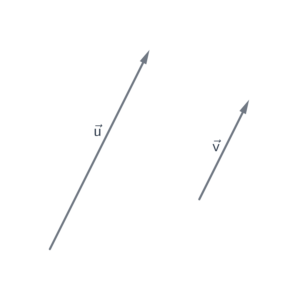
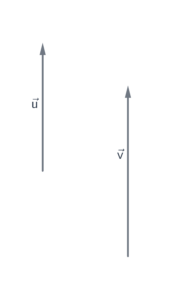
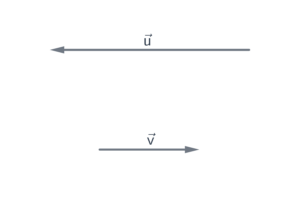
In each of the following problems, add the vectors shown and draw the resultant vector.
3.1.1.3 Problem set
In each of the following problems, add the vectors shown and draw the resultant vector.
3.1.1.4 Problem set
- If
and
, show the following vectors geometrically on the coordinate plane.
- If
and
, show the following vectors on the coordinate plane.


3.2 Scalar multiplication
3.2.1 Exercises
3.2.1.1 Problem set
3.3 Subtraction
3.3.1 Exercises
3.3.1.1 Problem set
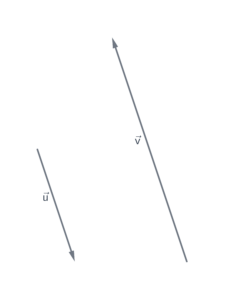
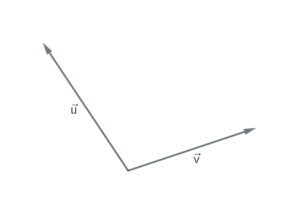
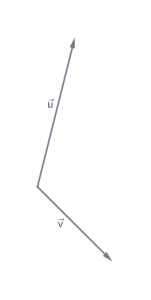
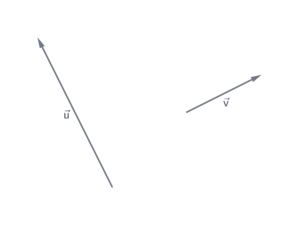
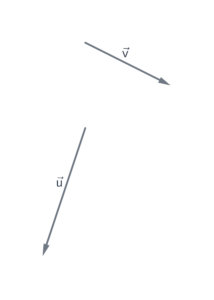
In each of the following problems, draw the vectors $\vec{u}-\vec{v}$ and $\vec{v}-\vec{u}$.
3.4 Dot product
3.4.1 Exercises
3.4.1.1 Problem set
- Evaluate
- Evaluate


3.4.1.2 Problem set
In the following, 

- If
and
, find
.
- If
and
and
, find
.
- If
and
, find
.
- If
and
and
, find
3.5 Cross product
3.5.1 Exercises
3.5.1.1 Problem set
4 Applications
4.1 Angles and projections
4.1.1 Exercises
4.1.1.1 Problem set
- Find the angle between the two vectors
and
.
- Find the angle between the two vectors
and
.
4.1.1.2 Problem set
- Line
goes through points
and
. Line
goes through points
and
. Determine the angle formed between the lines at their point of intersection.
- [Work in progress]Two rectangles adjacent problem with side lengths 1,5 and 2,3.
4.2 Word problems
4.2.1 Exercises
4.2.1.1 Problem set
- In a river that runs northward, Ben starts swimming with a velocity of
.
- Will, shortly after, starts swimming at twice the speed of Ben in the same direction as Ben. What is the velocity of Will?
- Then, Mishka, starts swimming at three times the speed of Ben in the opposite direction as Ben. What is the velocity of Mishka?
- Brady and Derek apply forces of
lb and
lb respectively. If the angle between their directions of force application is
, determine the magnitude and direction of the effective force on the object.
- Grant applies a force of
N on an object. James applies a force of
- Burkard applies a force of
N on an object. Marty applies a certain force on the same object so that the resultant force on the object is
- Matt applies a force of
N on an object. Freya applies a certain force on the same object so that the resultant force on the object is
with Matt’s force. Determine the magnitude and direction of Freya’s force.
4.2.1.2 Problem set
- A river goes in the north-south direction. Mandy and Ralph cross the river by swimming in the general northwesterly direction, making an angle of
degrees with the east-side bank. Mandy swims at
mph and Ralph swims at
mph.They both start and end at the same points.
- Show the velocities of Mandy and Ralph graphically on an appropriate reference coordinate plane.
- Give the velocity vectors in component form.
- Hannah is driving with a velocity of
. Assume a coordinate plane where the X-axis goes east-west and the Y-axis goes north-south, and assume the velocity’s is given in mph. Describe Hannah’s velocity (magnitude and direction).
4.2.1.3 Problem set
- Evan is standing
lb. Carter is standing
- Represent the two forces geometrically. Do not use a coordinate plane.
- Geometrically estimate the effective force (magnitude and direction) on the object.
- Represent the two forces in component form.
- Give the effective force on the object in component form.
- Rich, Greg, Brian, Sameer, Arthur and Will are standing in a circle in that order going clockwise. The distances between any two adjacent people are the same. There is an object located at the center of the circle that each one is applying force on to pull it towards himself. They apply forces of
lbs respectively.
- Represent the forces geometrically. Do not use a coordinate plane.
- Geometrically estimate the effective force (magnitude and direction) on the object.
- Represent the forces in component form.
- Give the effective force on the object in component form.
- Steven is standing
N. Alex pulls on a second rope tied to the desk also with a force of
N. Determine the distance between Steven and Alex so that they maximize the effective force if
- Alex is standing
- Alex is standing
- Alex is standing
- In a river that flows northward, Bala attempts to swim at a speed of
mph in the direction that makes
mph.
- Geometrically, find the speed of the water flow in the river. Do not use coordinate plane or component form for this step.
- Geometrically, find the direction in which Bala ended up swimming. Do not use coordinate plane or component form for this step.
- Give the component form for the effective velocity of Bala.